A Living, Working Farm
At Zinc House Farm, ten acres of diverse landscapes surround Clark Ferrea Winery. Here you’ll find a five-acre certified organic garden, vibrant flower fields, a fruit forest, and spaces alive with pollinators and wildlife. From native plant buffers and insectaries to goat paddocks and chicken coops, every corner of the farm reflects a philosophy of biodiversity, sustainability, and beauty.

Natural Systems & Sustainability
Zinc House Farm is organized around systems that keep the land productive and healthy. Native plantings provide buffers and habitat, while insectary beds support pollinators and beneficial species. These elements form the backbone of our sustainable approach, allowing the gardens, orchards, and crops to thrive without heavy intervention.
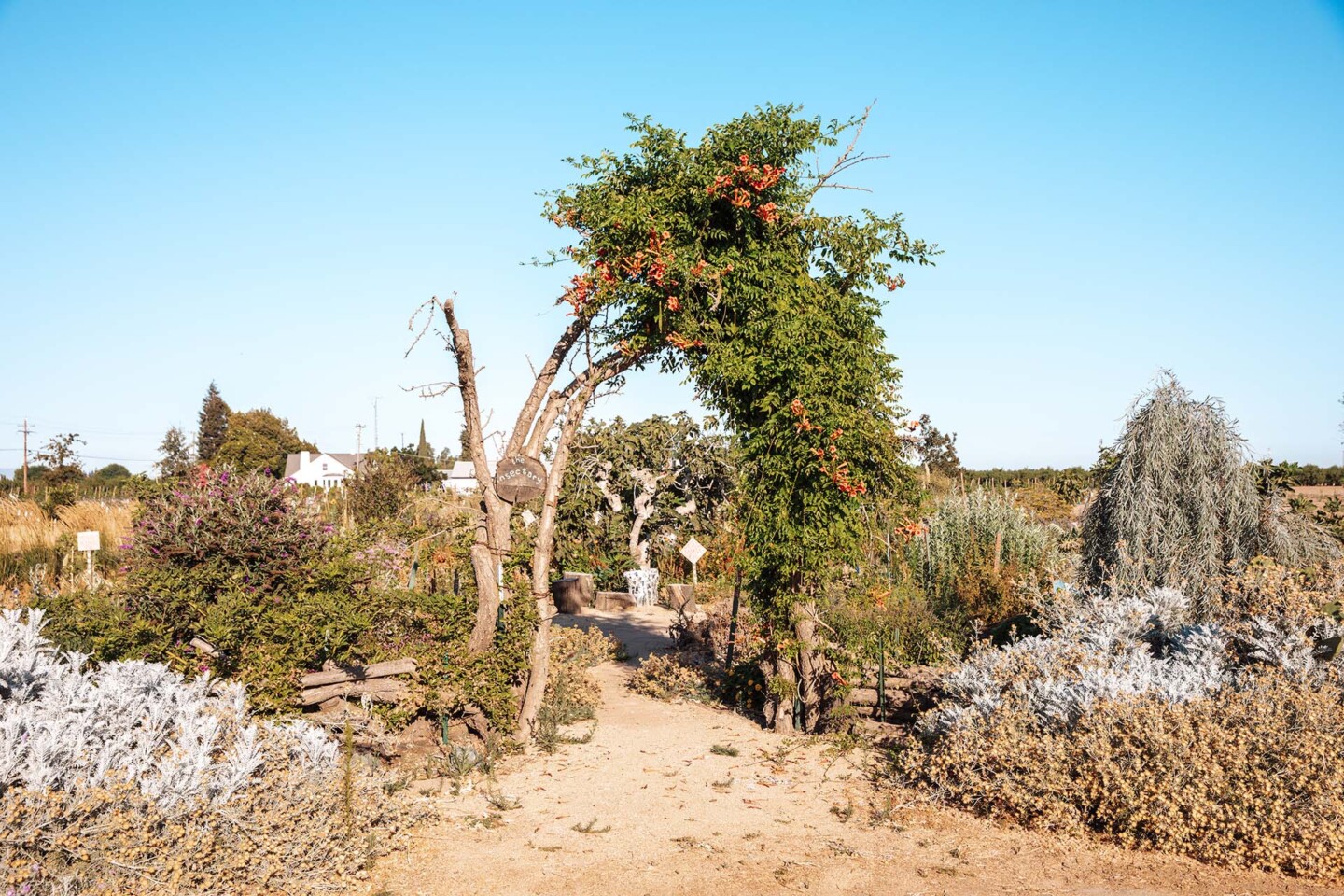
The Insectary
Designed as both a working and educational space, the insectary garden demonstrates how diverse plantings support beneficial insects year-round. Medicinal herbs, comfrey, lavender, seasonal flowers, and fourteen varieties of fig trees provide nectar and shelter, ensuring pollinators and predators thrive. This biodiversity helps control pests naturally while offering a continuous bloom cycle.
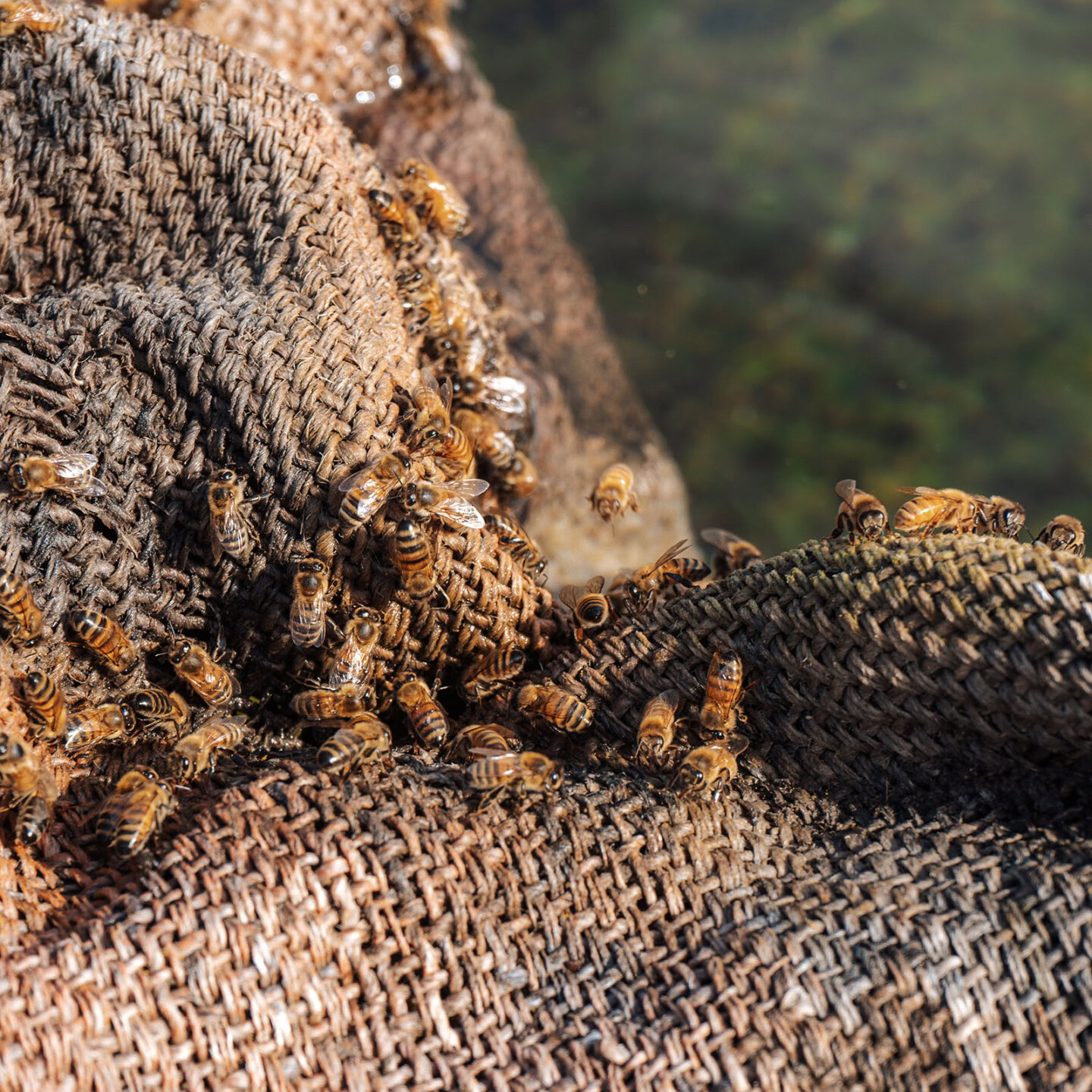
West Side Native Plantings
Along the west side of the property, a stand of California native oaks provides a protective buffer for the organic gardens. Beneath them, a rich understory of native willows, asters, sunflowers, hibiscus, elderberry, buckwheat, quailbush, and white sage has created a thriving ecosystem.
This section carries a special story: a volunteer named Josh, seeking healing after his mother’s passing, planted many of the natives that now flourish here. His work introduced vital habitat plants—like desert willow, host to dozens of beneficial insects—that provide beauty, floral material for arrangements, and long-term resilience to the land.
Together, these plantings support hawks and owls (essential for controlling gophers), nurture pollinators, and eliminate the need for chemical intervention. Today, the west side is a living classroom in the power of native landscaping.
Goats, Chickens, and Camping
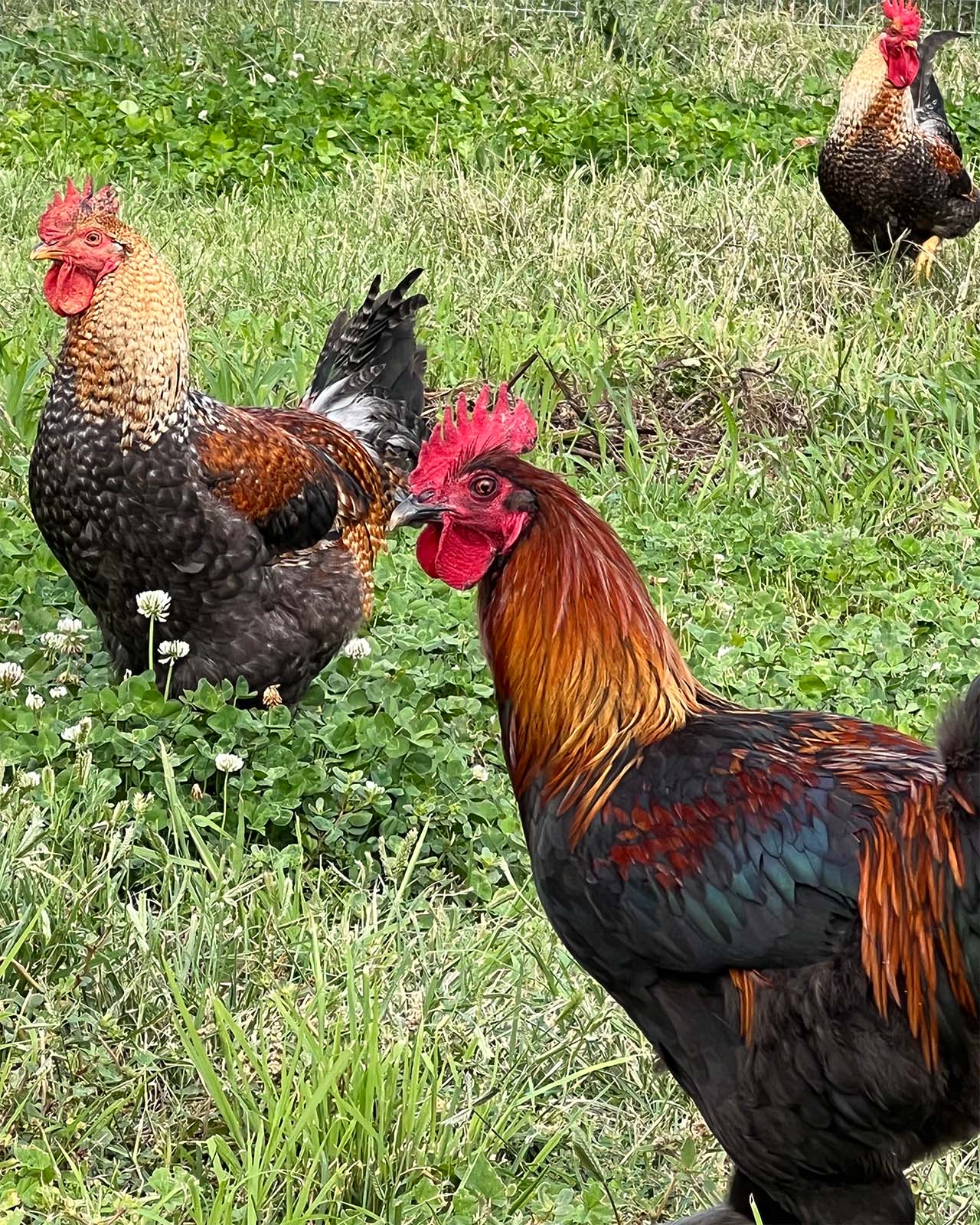
Beyond the gardens, the farm is also home to goats (Hope and Remington) and a lively chicken coop. Together, they contribute to soil fertility and the working rhythms of the farm. A future camping alcove, designed as a natural retreat framed by bush fencing and hammocks, will invite guests to spend more time immersed in the landscape.
Cultivated Gardens
Beyond the native plantings and insectary, the farm includes areas dedicated to food and flowers. These cultivated gardens supply seasonal produce, herbs, and cut flowers for the winery and piazza, while also demonstrating practical methods like crop rotation and companion planting. Together, they show how working gardens can be both productive and beautiful.
The Cutting Garden
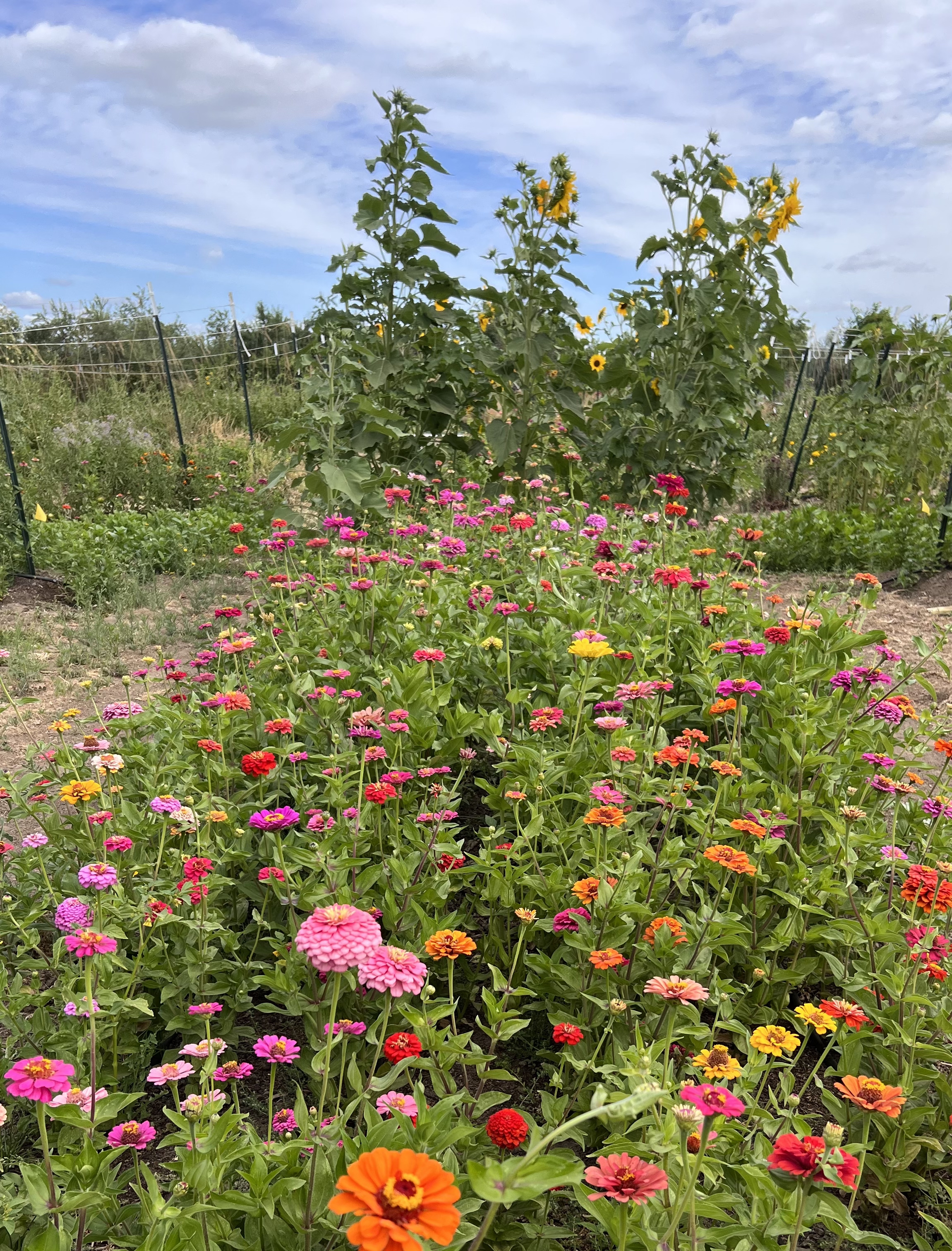
Our flower cutting garden provides arrangements for the tasting room, arbors, and piazza throughout the year. From citronella geraniums to native asters and roses, the beds are planted with color and texture in mind—yielding bouquets that celebrate both the season and the land.
The Fruit Forest
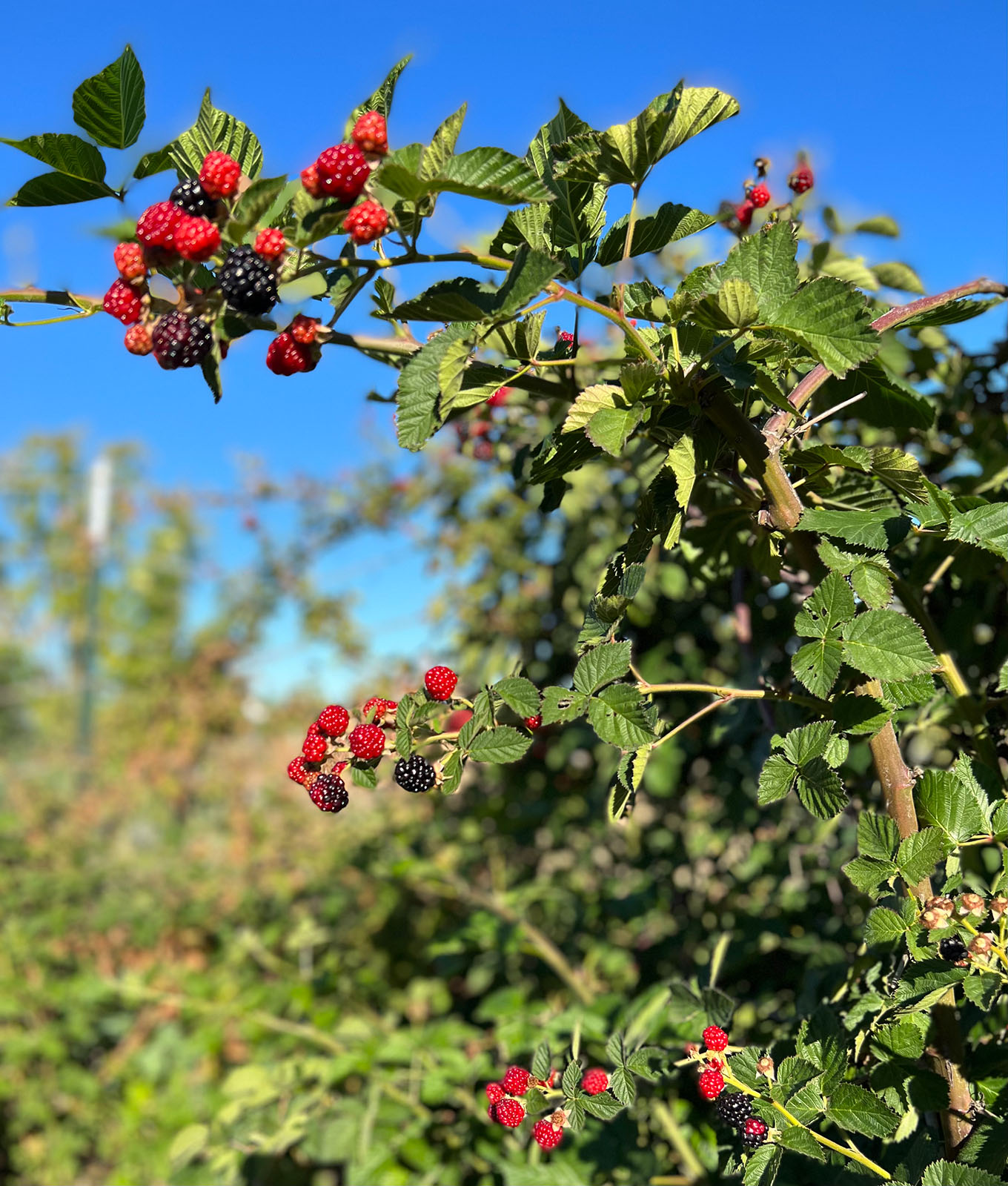
The fruit forest follows permaculture principles, using layers of trees and understory crops to create a climate-adjusted growing environment. Here, visitors find pluots, white and red pomegranates, persimmons, and kale thriving in summer shade. This system allows cool-weather crops to grow under the canopy of fruit trees, extending seasons and diversifying the harvest.
Row Crops and Rotation Beds
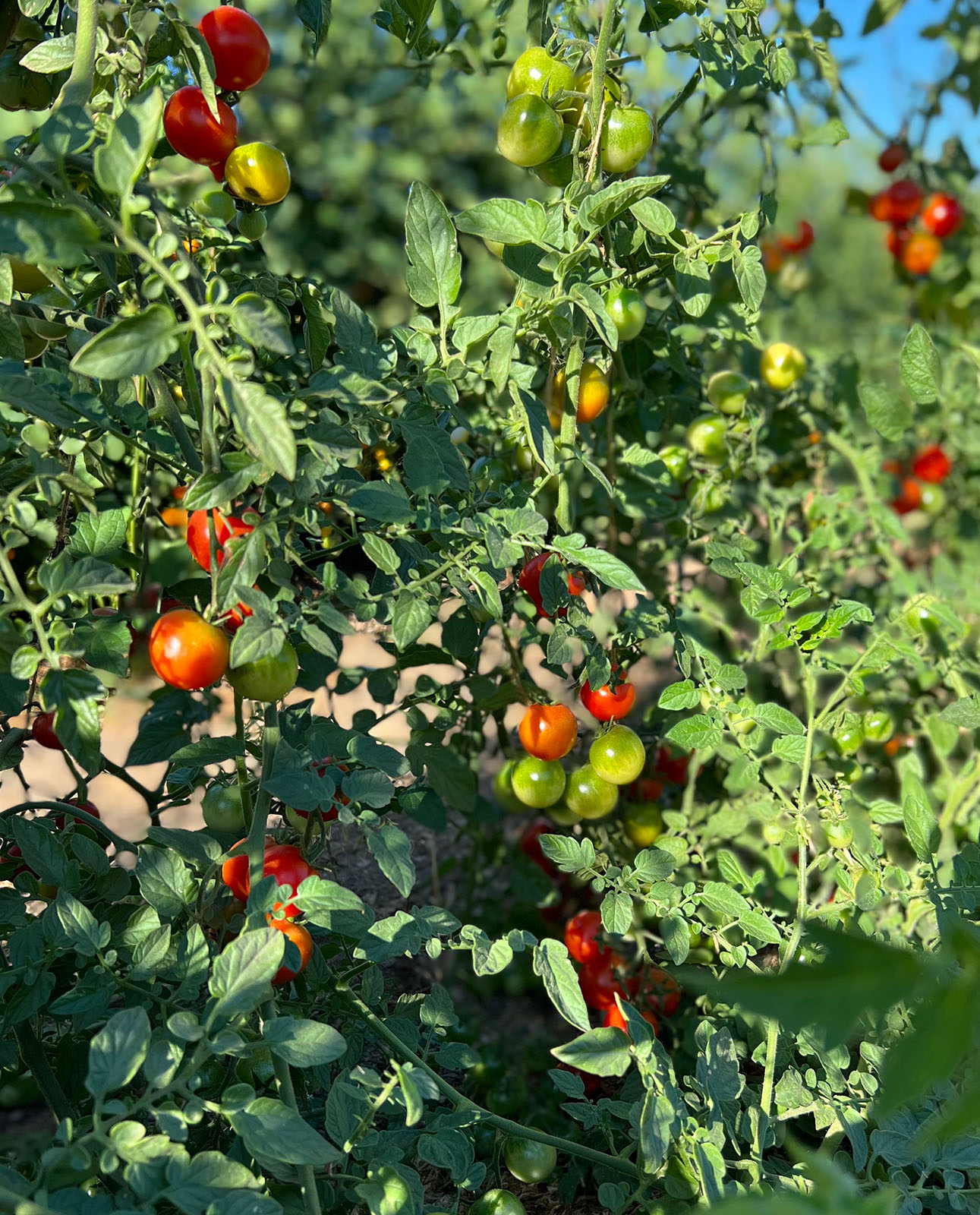
Seven rotation beds support a wide variety of vegetables. Each year, one bed lies fallow, while others cycle through crops in a six-year rotation. Tomatoes—cherry, heirloom, and other varietals—rotate with cucumbers, zucchini, melons, and peppers to maintain soil health and reduce pest pressure.
The farm grows more than 25 varieties of tomatoes and 20 varieties of peppers, alongside four kinds of melons. Herbs—including oregano, thyme, rosemary, lavender, sage, curry plant, and tarragon—add fragrance, flavor, and diversity.