Celebrating a Rich History in Escalon
Zinc House Farm takes its name from a remarkable little prefab house shipped in 1853 from Boston to the Port of Stockton, then hauled inland via French Camp Slough and a six-horse Fisher Stage Line to a site on French Camp Road, just north of Highway 120. The journey took roughly six months. Purchased by Ebenezer Holt Allan, a 30-year-old Connecticut-born farmer in the Stockton area, for $1,850 (about $78,000 in 2026 dollars), the 12’×16’×7′ structure was assembled “to the awe and wonder of locals,” and may have been one of California’s first prefab buildings.
In March 1848, gold was discovered in the Sierra foothills; by 1850, the Gold Rush was in full swing, as were miners’ picks, and Stockton became a vital link between port and mines…

On the Road to the Mother Lode
Seeing the need for a stop on the road between the Port of Stockton and the Mother Lode, Ernest Wagener—a Hanover-born, 40-year-old wheat farmer—arranged in October 1853 to rent the zinc house from Allan for five months at $800 (about $35,000 in 2026). The building was moved two miles southeast and reassembled on Wagener’s 640-acre homestead at what is now the intersection of Highway 120 (“Yosemite Road”), French Camp Road, and Wagner Road. By March 1853, Wagener had purchased the building outright.
Wagener immediately built a wooden barn to serve horse teams and drivers moving freight to and from the mines. Records from 1853 note as many as seventy wagons per day, each pulled by six-horse teams and hauling 5–8 tons of supplies, with rapid two-minute team changes at ZINC HOUSE STATION. A February 1861 Stockton newspaper mentions a 40-mule pack train headed for Hornitos passing through Zinc House, each mule loaded with 200–300 pounds of dry goods—evidence of the corridor’s heavy traffic.
From Stopover to Community Center
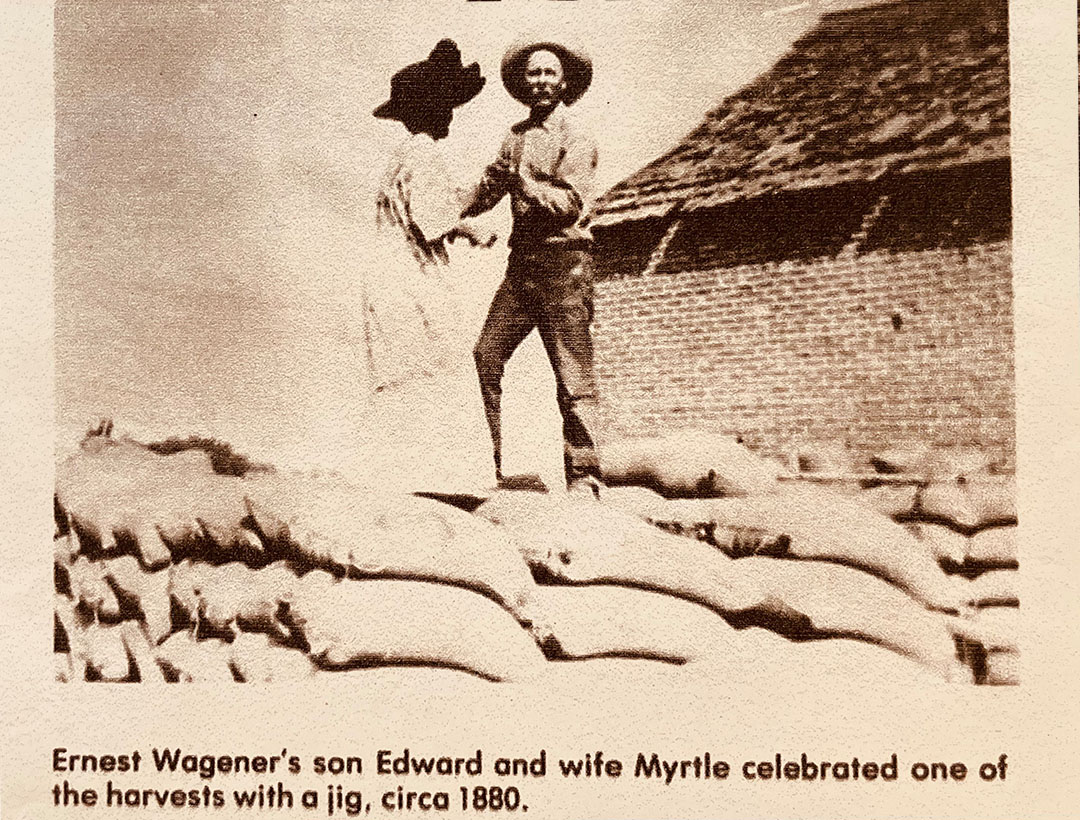
By 1860, Wagener had constructed a large home on the property. In 1865, two brick structures—stables and a granary—replaced the original wooden barn; the bricks were made on-site. One of those barns remains today, visible south of Highway 120 at Wagner Road, about two miles west of the present-day Zinc House Farm. An artifact found buried there, a Chinese steam-cooker, suggests Chinese workers may have prepared full meals for travelers over a single fire.
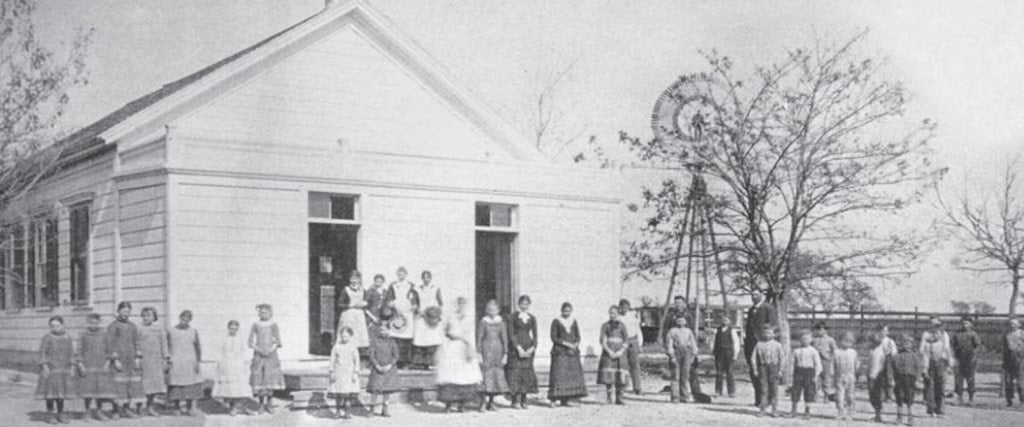
As mining waned, by 1864 Zinc House had shifted roles, becoming a shipping center for local grain farmers. Over the years, the little building served many purposes: Wagener’s home; Zinc House Hotel, “noted for its fare”; Zinc House School; Zinc House Station. A 1975 Stockton Record story recalls that “one night in those early days, the old schoolhouse burned down the night before the school term was to begin. The children found only ashes to greet them on their arrival the first day.”
So, the little zinc house became ashes and rust. Today, all that remains to mark Wagener’s zinc house of 1850 is a single, solitary, handsome, brick barn.
Clark Ferrea at Zinc House Farm Today
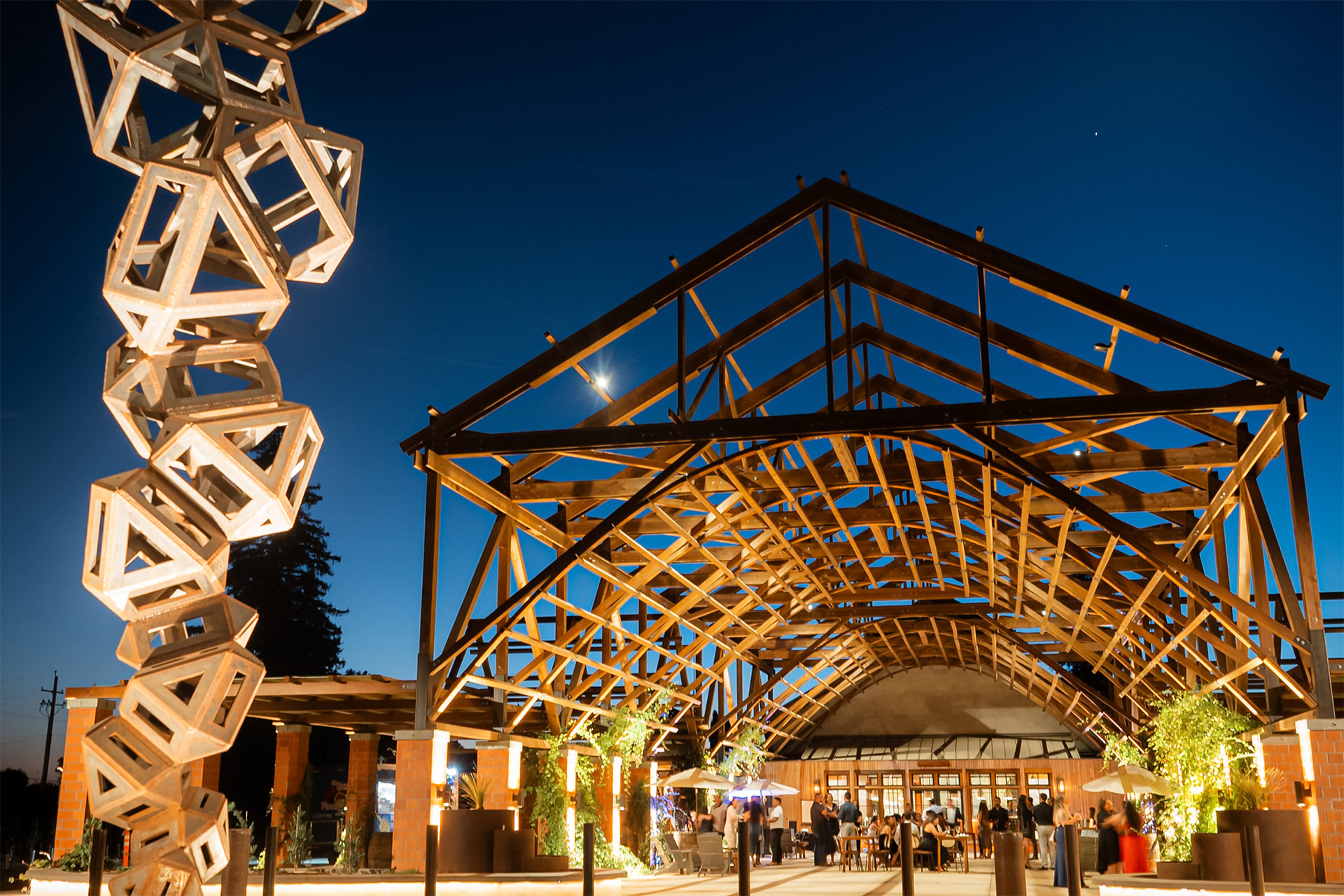
Today, Zinc House Farm begins a new chapter as the home of Clark Ferrea Winery. What was once a stopover for miners and freight teams has become a place for gathering, agriculture, and winemaking. With deep respect for the land and the stories embedded in it, Clark Ferrea at Zinc House Farm, carries forward the spirit of work, community, and connection that defined this place more than 180 years ago.
Here, we welcome food lovers, farmers, and families to experience history, farming, and wine together in a living landscape.